


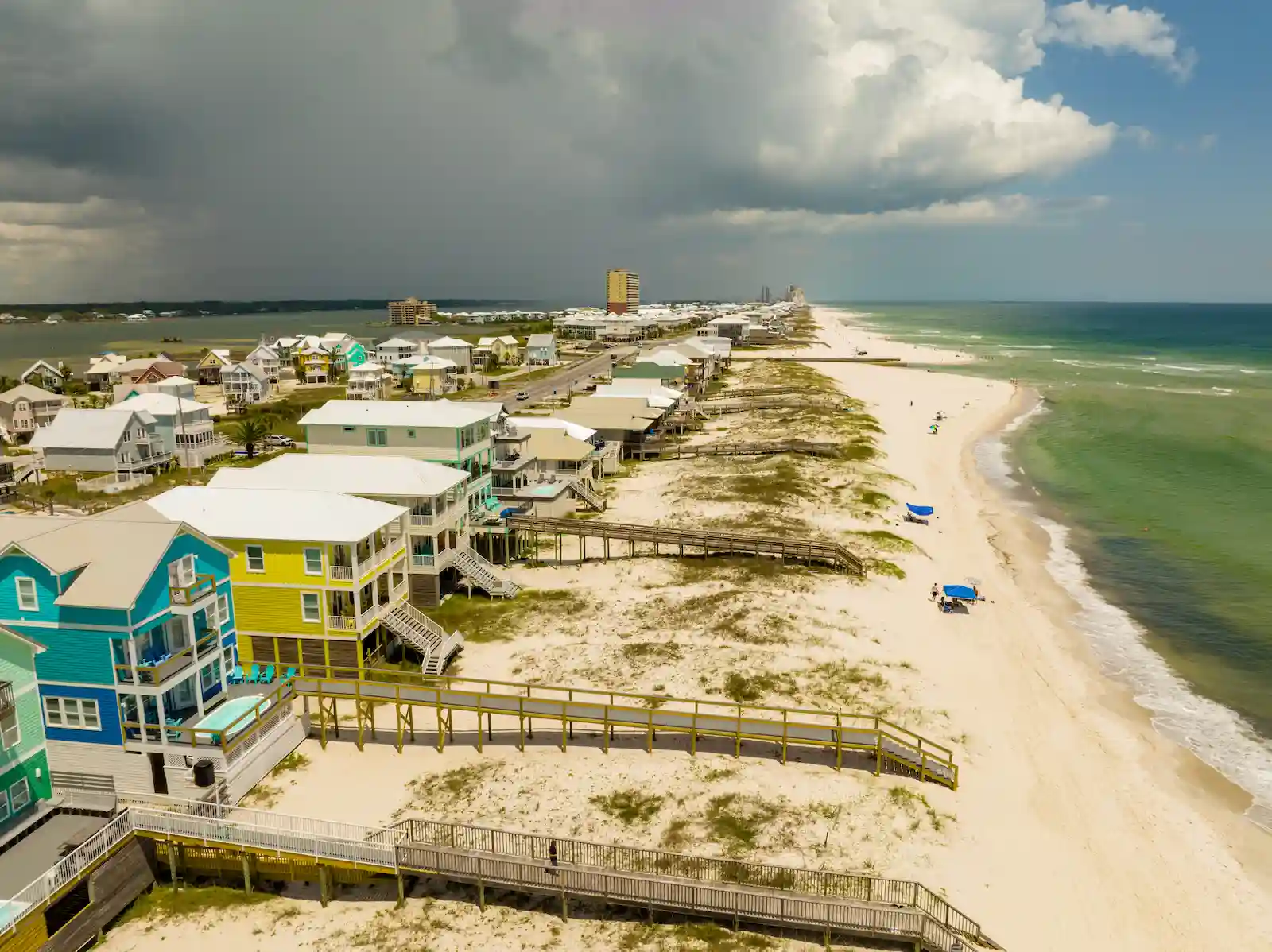
Living on the Gulf Coast means tropical storms and hurricanes are part of life. While Tropical Storm Bertha largely spared the Baldwin County area, it served as a useful reminder that the next storm is always a season away. The best time to prepare is before a storm is in the forecast, not after it has already formed in the Gulf.
Here is what Gulf Shores and Baldwin County homeowners should do now to make sure their home is ready when the next storm arrives.
How to Protect Your AC System Before a Storm
Shut It Off at the Thermostat and Breaker
When a tropical system is approaching, turn your AC off at the thermostat and switch it off at the breaker before the storm arrives. Power surges and outages during a storm can damage the compressor if the system is running when the grid goes down or comes back up. Once power has been stable for a few minutes after the storm passes, it is safe to restart.
Clear Debris from the Outdoor Unit
Clear the area around your outdoor condenser of anything that could become a projectile in high winds, including patio furniture, potted plants, loose fencing, and garden tools. It is always best practice to keep at least two feet of clearance around the unit throughout the year, but this is especially important before a storm.
Check Your Condensate Drain Line
A slow or clogged condensate line combined with the high humidity of a tropical storm can cause backups and water damage inside your home. Confirm that your drain pan is clear and the line is flowing freely before storm season gets underway.
Document Your Equipment
Take photos of your outdoor AC unit and other major equipment and store them somewhere accessible. If you sustain storm damage and need to file a homeowner’s insurance claim, pre-storm documentation makes the process significantly easier.
Electrical Preparedness for Gulf Coast Storms
Install Whole-Home Surge Protection
When the electrical grid goes down and comes back online, power surges can occur. These power surges are a leading cause of storm-related damage to electronics, appliances, and HVAC systems. Whole-home surge protection is the most effective defense and can be installed well in advance of storm season. Our licensed electricians can handle the installation before the next storm is ever in the forecast.
Unplug Sensitive Electronics Before a Storm
As a basic precaution before any storm, unplug televisions, computers, and other sensitive devices. Power strips and surge protectors help but are not a substitute for unplugging during a significant weather event.
Know Where Your Main Breaker Is
Every adult in your household should know where the main electrical panel is and how to shut it off quickly. If flooding reaches any outlets or wiring in your home, shut off the main breaker immediately and do not restore power until a licensed electrician has inspected the system.
Get Your Generator Ready Before Storm Season
If You Have a Standby Generator
A standby generator should run a self-test automatically each week. Before storm season, run a manual test to confirm it starts and operates correctly. Check the fuel supply, clear debris from around the unit, and confirm the automatic transfer switch is functioning. Schedule a tune-up if it has not been serviced in the past year.
If You Have a Portable Generator
Never run a portable generator inside your home, garage, or any enclosed space. Carbon monoxide poisoning is a leading cause of storm-related fatalities. Operate portable generators at least 20 feet from any door, window, or vent. Test it before storm season and stock up on fuel early.
If You Do Not Have a Generator
Extended power outages on the Gulf Coast are a genuine safety concern, particularly for households with elderly family members, young children, or medical equipment that requires power. A whole-home standby generator turns on automatically the moment power goes out, with no manual setup and no running outside in the rain. Installing one before storm season gives you peace of mind well before you need it.
Plumbing Steps to Take Before Storm Season
- Locate your main water shutoff valve and make sure every adult in the household knows how to operate it quickly
- Check for slow or sluggish drains before storm season arrives, since heavy rainfall can overwhelm sewer systems and cause backflow into lower-level fixtures
- Know your gas shutoff location and what to do if you smell gas after a storm
After Any Storm: What to Check Before Restarting Your Systems
- Inspect your outdoor AC unit for debris, visible damage, or signs of flooding before turning it back on
- Wait 3 to 5 minutes after power is restored before restarting your AC to allow system pressure to equalize
- Check near your electrical panel for any signs of moisture before restoring power if your home experienced flooding
- Inspect under sinks and around your water heater for storm-related water intrusion or pipe stress
- Do not attempt post-storm electrical, HVAC, or plumbing repairs yourself — call a licensed professional
Roberts Can Help You Get Ready
Effective Gulf Coast storm preparation begins before a weather threat is seen in the forecast. Roberts Cooling, Heating, Plumbing & Electrical serves Gulf Shores, Orange Beach, Fairhope, Foley, Elberta, and surrounding Baldwin County communities. Whether you need a generator installation, a surge protector, an AC tune-up, or a plumbing inspection before storm season, our team is ready.
- AC Repair
- AC Tune-Up
- Generator Installation and Service
- Electrical Services
- Plumbing Services
- Schedule Service Online
Call us at (251) 288-5125 or request service online. Do not wait until a storm is in the Gulf to start preparing.